A multi-faith room is one room shared by people of every faith and none. Most of what it needs is simple: quiet, clear floor and a door. The part that gets missed is washing. This guide explains what to provide, where to put it and what it costs, for offices, hospitals, universities and public buildings.
1. Why washing comes up
Muslims pray five times a day, and before praying they wash. The wash is called wudu, and it covers the hands, mouth, nose, face, arms, head and feet. Two or three of the prayer times fall inside a normal working day, depending on the season.
In a building with nowhere to do this, people use the nearest washroom and lift their feet into the hand basins. That leaves water on the floor, is awkward and unsafe for the person doing it, and is uncomfortable for everyone else using the washroom. A proper wash point solves all three.
2. What the law says
In Great Britain, religion or belief is protected under the Equality Act 2010. The clearest plain-English guidance for workplaces comes from Acas:
- No duty to provide a prayer room. Acas says employers do not need to provide a dedicated prayer room, and that there is no legal requirement to allow time or facilities for religious reasons.
- But consider it. Acas says employers should consider providing a suitable space, and should try to accommodate requests where they can. Refusing a request without a good reason could be discrimination.
- Treat faiths equally. If you provide facilities, they must not favour one religion or belief over another.
Source: Acas, Preventing religion or belief discrimination, updated 29 October 2024. This is general information, not legal advice. Hospitals, universities and other public bodies usually have their own policies on top of this.
3. Where the washing should go
- Beside the room. People wash and then walk to pray with clean, damp feet. The shorter that walk, the better, and it should be on a dry floor.
- Outside the room itself. Water and prayer mats do not mix. Keep the wash point in its own space, or behind a screen, so the prayer room stays dry and quiet.
- Apart from the toilets where you can. A separate small wash room is the best arrangement. Where that is not possible, a unit in the washroom away from the cubicles is still far better than nothing.
- Private. People roll up sleeves and wash their feet, so a door or screen from the corridor matters.
4. How many units
Multi-faith rooms are usually small, and one wash point is the usual starting point. Add a second if men and women will wash at the same time in separate spaces, or if you expect a queue at midday.
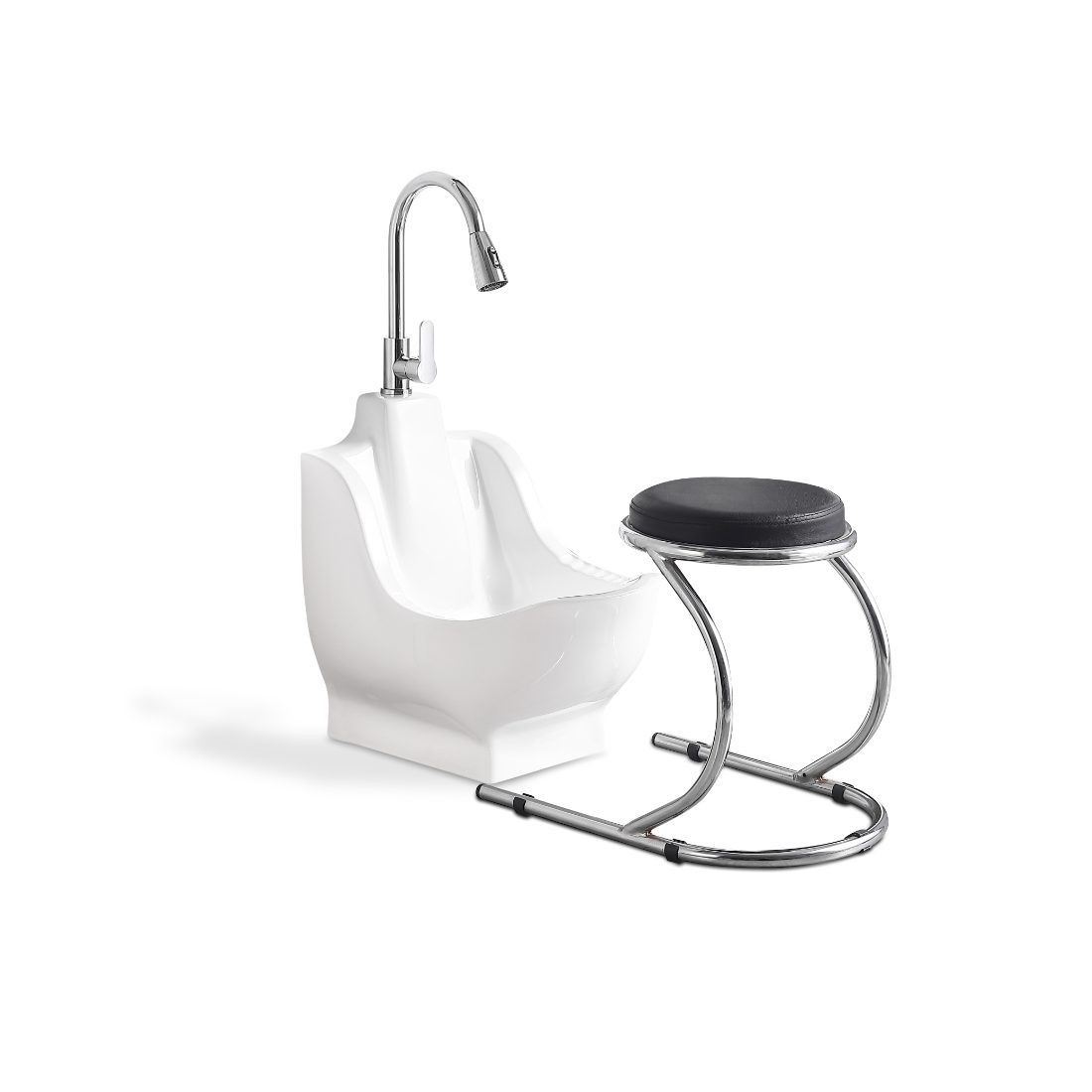
Some real examples: SOAS University of London installed three seated Paradise units. A new office in West London fitted two Dual Level 2.0 basins. We also work with NHS hospitals, including University Hospital Southampton.
For larger rooms, our wudu area design guide shows how to count wash points and set out a run of units.
5. Which unit
The right unit depends on the space and on who will use it.
| Your situation | Unit | Size | Price |
|---|---|---|---|
| Inside an existing washroom, with the least space | Dual Level Wall Mounted | Overall height 790 mm | £299 + VAT |
| A small room used by children, adults and wheelchair users | Flex | 530 × 430 × 620 mm | £479 + VAT |
| Users who need to sit | Paradise | 1030 × 610 × 640 mm | £449 + VAT |
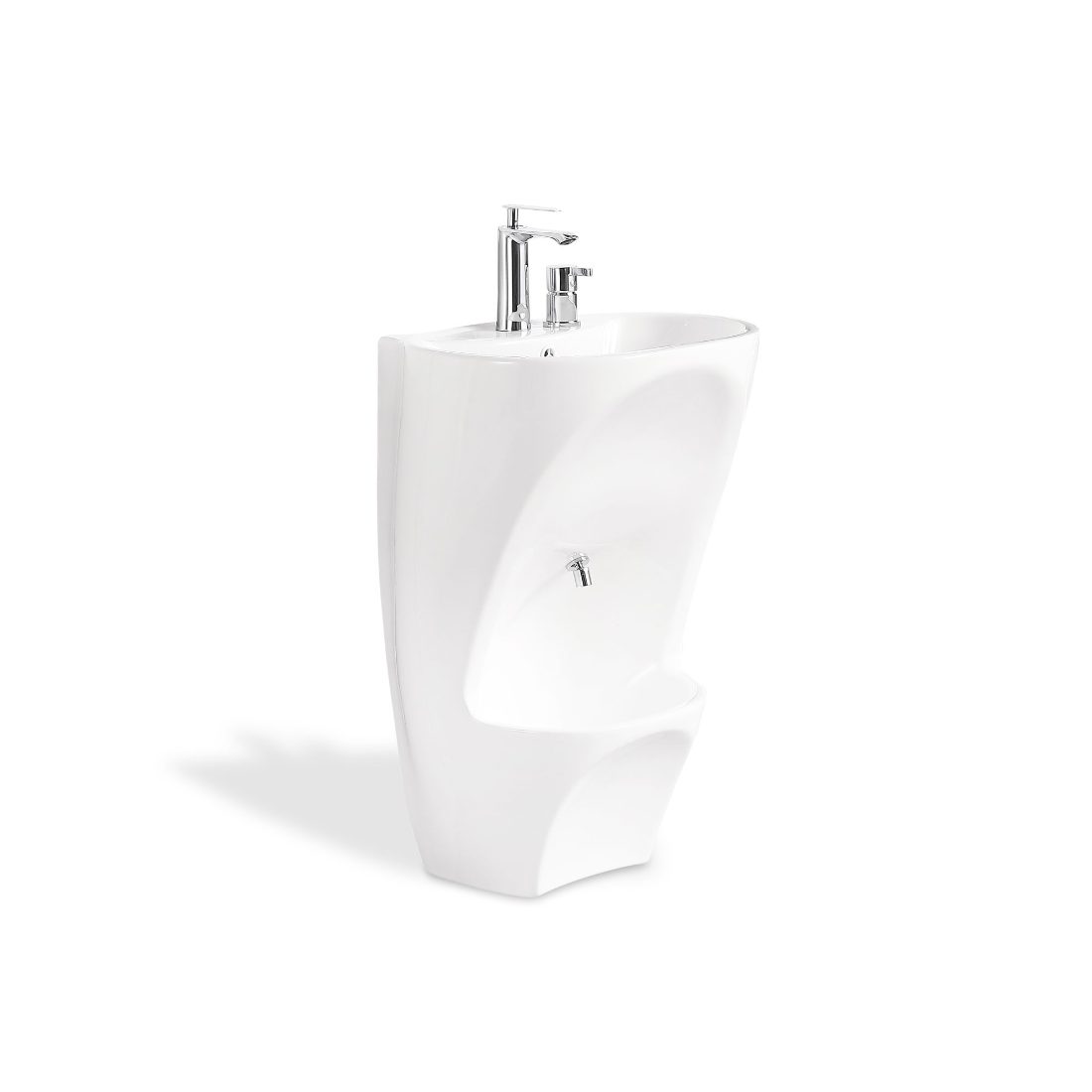
| A prayer room on show in an office or hotel | Flow | 900 × 1022 × 1100 mm | £1,895 + VAT |
| Heavy daily use, with seat, basin and tap in one piece | All-in-One Wudu Unit Single | 600 × 990 × 800 mm | £765 + VAT |
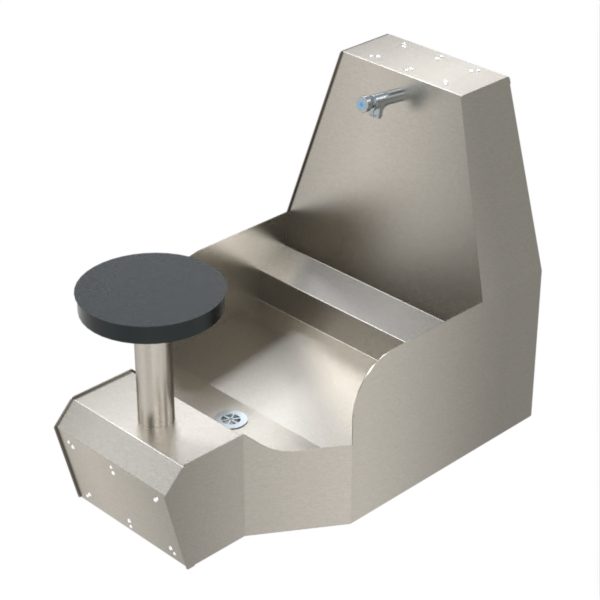
| Mental health, custodial and other secure settings | Anti-Ligature Single Unit | 600 × 865 × 700 mm | £1,060 + VAT |
| A wash point a wheelchair can come up to | Anti-Ligature Wheelchair Unit | 800 × 470 × 700 mm | £945 + VAT |
Prices are before VAT. The Flex comes with a removable stool, and taking the stool away leaves space for a wheelchair user. You can compare every wudu basin side by side.
6. Keeping it shared
A multi-faith room belongs to everyone, and the washing area should feel the same.
- Keep it plain. A wudu unit is a washbasin with a low bowl. It carries no religious symbol, and anyone can use it to wash.
- Say what it is for. A sign stops the unit being mistaken for an ordinary sink, and tells other users why it is there. Wudu signage comes in male and female versions.
- Agree how it is shared. If one wash room serves men and women, agree set times or add a second unit.
- Put it on the cleaning schedule. A wash point is used several times a day and needs the same routine as any washroom.
7. The room itself
- A sign on the door. Our Multi-Faith Room Sign is 300 × 100 mm, at £19.95 + VAT.
- The direction of prayer. A small Qibla sign, 80 × 50 mm, shows Muslim users which way to face.
- Shoes and storage. A shoe rack by the door, and a cupboard so each group can put its own items away after use.
- A floor that stays dry. Anti-slip matting at the wash room door takes water off people's feet before they reach the corridor.
8. What it costs
The lowest-cost route is one Dual Level Wall Mounted basin at £299 + VAT. Installation is available from £99, and delivery in England and Wales is £38.95 for one unit. All of these are before VAT.
Building work to bring a water supply and a waste to the spot is separate. Choosing a location next to existing plumbing keeps that cost down.
9. What to send us
- A plan or photos of the multi-faith room and the nearest washroom.
- Roughly how many people use the room, and at what times.
- Where the nearest water supply and waste are.
- The type of building: office, hospital, university, school or public building.
We aim to answer every quote request within 30 minutes in working hours. Request a quote, or try the layout yourself in the 3D Studio.
Questions
Do employers have to provide wudu facilities?
No. Acas, the workplace advice service for Great Britain, says there is no legal requirement for employers to allow time or facilities for religious reasons, and that an employer does not need to provide a dedicated prayer room. It also says employers should consider providing a suitable space, and that facilities must not favour one religion or belief over another. This is general information, not legal advice.
What should a multi-faith room have?
A plain, quiet room that any faith can use: clear floor space, somewhere to leave shoes, storage so each group can put its items away, a sign on the door and a Qibla direction marker. Somewhere to wash close by makes the room usable for Muslim staff and visitors.
Where should wudu facilities be placed?
As close to the prayer room as possible, but outside the room itself so the prayer space stays dry and quiet. Where you can, keep them apart from the toilets.
Can people perform wudu in an ordinary washbasin?
They can and often do, but washing the feet in a hand basin means balancing on one leg on a floor that is getting wet. A wudu unit has a low bowl or a seat for the feet, which is safer and keeps the water in the unit.
How much does a wudu point for a multi-faith room cost?
The lowest-cost route is one wall-mounted dual-level basin at £299 + VAT, with installation from £99 and delivery in England and Wales of £38.95, all before VAT. Building work to bring water and a waste to the spot is separate.
More guides
- Wudu area design: how to plan an ablution area
- Wudu at work: an employer's guide to wudu facilities
- Wudu facilities in schools and universities: a guide for estates teams
- Wudu facilities in hospitals: a guide for estates and chaplaincy teams
- Anti-ligature wudu units: a guide for mental health and secure settings
- How many wudu stations does a mosque need?
- Wudu basin buying guide: ceramic, acrylic, solid surface or stainless steel
- Wudu sink with foot wash for the home: sizes, plumbing and price
- What is an ablution unit?
- Installing a wudu station: plumbing, drainage and what to check
- Ablution areas for UAE and Gulf projects: a specifier's guide